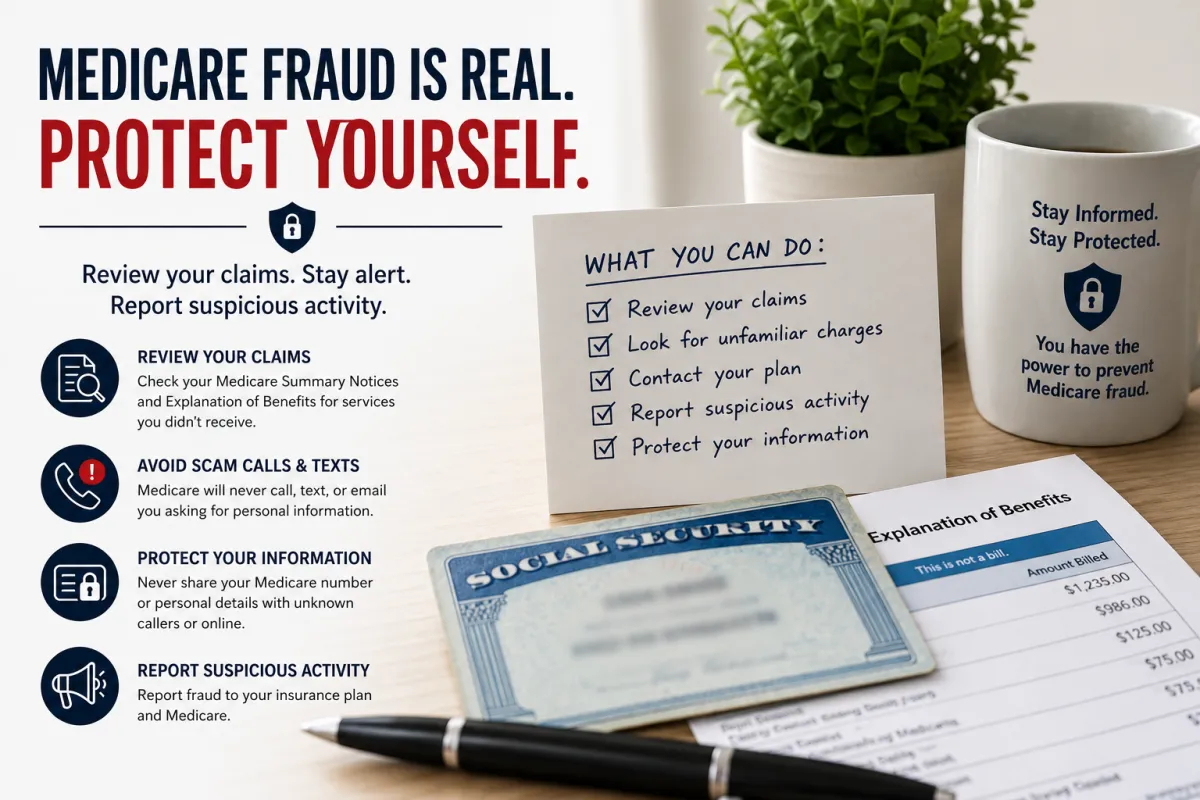
Medicare Fraud Alert
Medicare Fraud Alert: Why You Should Review Your Claims Regularly
Most Medicare beneficiaries assume that if they didn't order something, nobody can bill Medicare for it.
Unfortunately, that's not always the case.
Recently, one of my clients discovered a claim on her Medicare Advantage plan for medical supplies she never requested and never received. After investigating, we found reports linking the supplier to a nationwide billing scam involving fraudulent medical equipment claims.
This serves as an important reminder: every Medicare beneficiary should regularly review their claims and Explanation of Benefits (EOB) statements.
How Medicare Fraud Happens
Scammers often obtain Medicare numbers and personal information through phone calls, data breaches, online scams, or other fraudulent methods.
They may then:
Submit claims for medical supplies you never received
Bill for durable medical equipment you never ordered
Charge Medicare for services that never occurred
Use your Medicare information to commit identity theft
In many cases, victims don't realize anything happened until they review an Explanation of Benefits statement or receive a bill.
Watch Out for This Common Scam
Many Medicare beneficiaries are currently receiving phone calls, text messages, emails, and voicemails claiming:
"Your Medicare file has not been transferred into Medicare's national database."
Or:
"Your Medicare profile needs to be updated for 2026."
Or:
"Your Medicare coverage could be delayed if you don't verify your information."
These messages are fraudulent.
Medicare does not call beneficiaries out of the blue to request personal information, verify account details, or transfer files into a national database.
If you receive a call, text, email, or voicemail like this:
Do not provide your Medicare number
Do not provide banking information
Do not click links
Do not return the call
Delete the message and report it if appropriate.
How to Check for Medicare Fraud
I encourage all clients to periodically review:
Medicare Summary Notices (MSN)
Medicare Advantage Explanation of Benefits (EOB) statements
Prescription drug claims
Medical supply claims
Look for:
Services you never received
Medical equipment you never ordered
Doctors you never visited
Claims from unfamiliar companies
Duplicate charges
Even small suspicious claims should be investigated.
What to Do If You Find a Fraudulent Claim
Step 1: Contact Your Insurance Company
If you're enrolled in a Medicare Advantage plan, call the member services number on the back of your ID card.
Explain that you believe a claim may be fraudulent and ask them to investigate.
Step 2: Document Everything
Keep copies of:
EOB statements
Claim information
Bills received
Phone numbers involved
Names of representatives you speak with
Step 3: Contact Medicare
You can report suspected Medicare fraud directly to Medicare by calling:
1-800-MEDICARE (1-800-633-4227)
Step 4: Report Identity Theft Concerns
If you believe your Medicare number has been compromised, ask Medicare and your insurance carrier what additional protective steps should be taken.
Step 5: Notify Your Medicare Advisor
If you're a client of The Medicare Butler, let me know as well.
While I can't process fraud investigations, I can often help you understand what you're seeing on your statements and point you in the right direction.
The Best Defense Is Awareness
Most Medicare fraud schemes succeed because beneficiaries don't know they're being targeted.
By reviewing your claims, protecting your Medicare number, and remaining skeptical of unsolicited phone calls, texts, and emails, you can dramatically reduce your risk.
If you ever have questions about a suspicious Medicare claim or communication, don't hesitate to reach out.
Sometimes a quick phone call can prevent a costly mistake.
— Rodney Butler
The Medicare Butler